
Hormonal imbalances can leave you feeling wrecked. You probably know what I am talking about – weight gain, fatigue, brain fog, menstrual issues, the list goes on.
Which led you here. You want to learn what foods can help to balance your hormones, bring back your vitality, and crank your energy back to 100%.
In this article, we will cover which foods you should be eating on the regular to help balance your hormones.
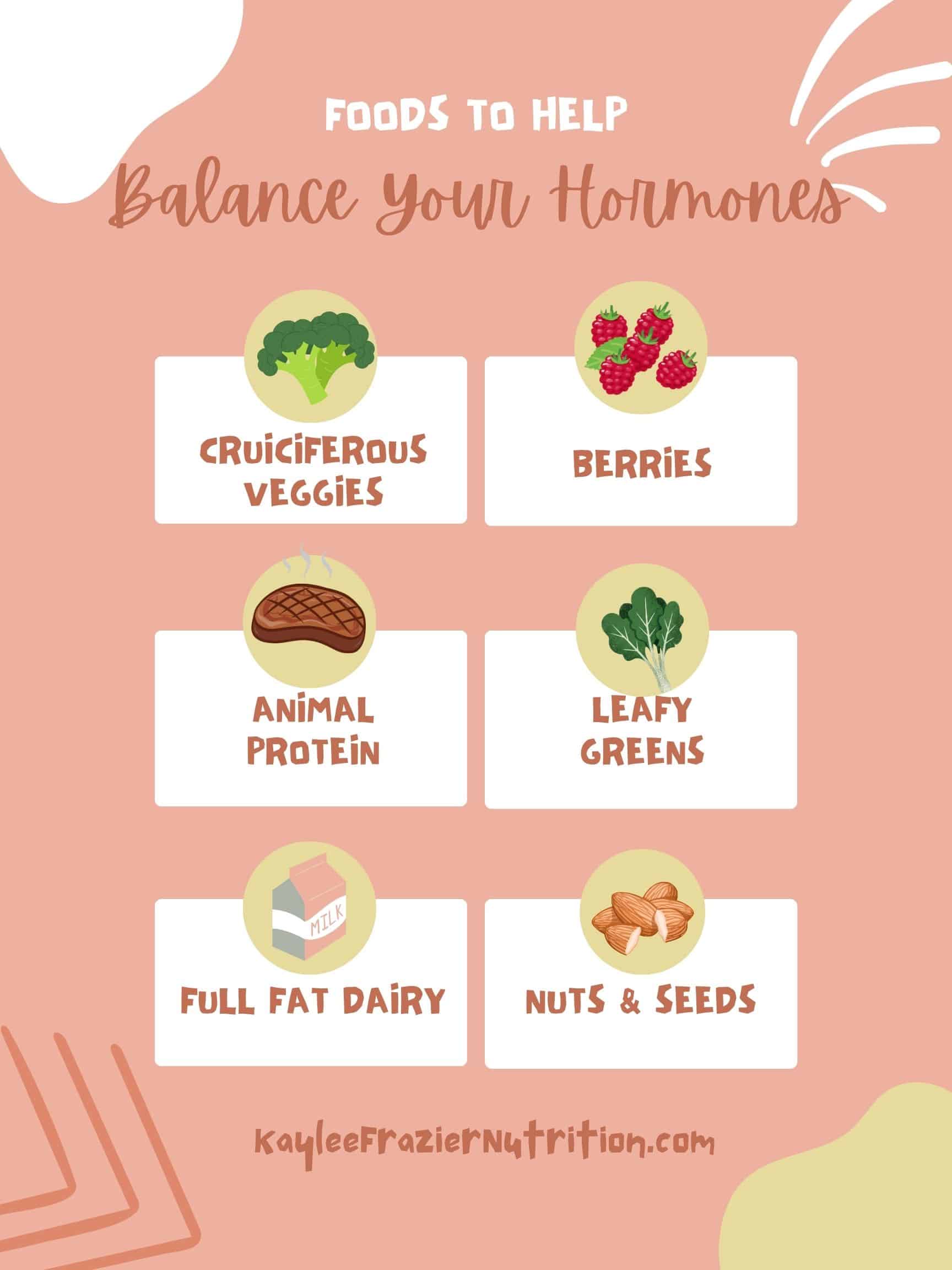
Foods to Help Balance Hormones
Food and overall diet is incredibly important for balancing your hormones. And while there are variations of what foods are ideal for each individual hormone imbalance, generally speaking, the following foods are great for anyone looking to balance their hormones.
Cruciferous Vegetables
Cruciferous vegetables include broccoli, cauliflower, Brussels sprouts, cabbage, and kale. These vegetables are superfoods when it comes to hormone balance.
Cruciferous vegetables contain compounds called diindolymethane (DIM) and sulphoraphane. These two compounds help to detox estrogen and maintain healthy estrogen levels in the body.
Additionally, these veggies are rich in fiber which is beneficial for blood sugar balance and insulin regulation.
One thing to keep in mind with cruciferous vegetables is that they also contain compounds called goitrogens. Goitrogens can prevent the uptake of iodine which can interfere with optimal thyroid function.
This is generally not a concern unless a person is eating heaps and heaps of cruciferous vegetables. But, one way around this concern is to eat your cruciferous veggies mostly cooked, since cooking disables the goitrogen compounds.
Try to consume cruciferous vegetables several times per week.
Berries
Berries are incredibly rich in antioxidants, which is a huge benefit for helping hormone balance. This is because antioxidants can help to scavenge and neutralize free radicals that cause oxidative stress.
Unchecked oxidative stress can interfere with hormonal signaling, specifically by damaging cells and enzymes that are required for thyroid, ovarian, and adrenal hormonal messages.
Berries are also rich in vitamin C which is a crucial nutrient for progesterone production. And, they are also loaded with beneficial fiber to help balance blood sugar.
Try to consume berries several times per week.
Animal Protein
Animal protein is jammed packed with nutrients that support healthy hormone production. Just to name a few:
- Iron: Iron is intimately connected with many hormone pathways including the thyroid hormones, progesterone, and insulin.
- Vitamin A: Vitamin A is essential for the synthesis of estrogen and testosterone, it also helps the thyroid gland produce thyroid hormones.
- Zinc: Zinc helps to regulate estrogen and progesterone levels and it is a key nutrient required to activate thyroid hormone.
- Cholesterol: Cholesterol is the structural backbone of all human sex hormones and is required in sufficient quantities to maintain hormonal balance.
- Vitamin B6: Vitamin B6 helps with the production of progesterone and overall hormone production.
Animal protein is also very helpful for improving blood sugar balance and insulin resistance. This is because there is essentially no insulin response from animal protein. And, when protein is paired with a carbohydrate, it also helps to slow the insulin response from that carbohydrate.
Many animal foods, especially those with the skin and/or bones, are also rich in collagen. In our body, collagen is broken down into several amino acids, including glycine. Our bodies use glycine to make the master detoxifying enzyme glutathione.
Glutathione is important for the detoxification process that occurs in the liver, including the detoxification of estrogen. Healthy estrogen detoxification is important to keep estrogen levels balanced. This is just another example of how our nutrition directly impacts our body’s function and hormone health.
Aim to eat at least 2-3 servings of high quality animal proteins daily.
Full Fat Dairy
Numerous studies have linked the consumption of full fat dairy and a reduced risk of infertility (1).
Dairy is rich in some key nutrients that support fertility and overall hormone balance. It is rich in vitamin B6, vitamin B12, iodine, and calcium.
And, to point out the obvious, full-fat dairy has more fat than low-fat varieties. This higher fat content helps to slow how quickly the carbohydrates are digested and ultimately lowers the body’s insulin response.
If you tolerate dairy, aim to eat it almost every day. This can include yogurt, cheese, kefir, whole milk, cottage cheese, and more!
Leafy Greens
Leafy greens hold many key nutrients that assist with hormone balance.
One of the most noted nutrients in leafy greens is folate, which gets a lot of attention for its role in neural tube development in early pregnancy. But folate is also very important as a component of methylation and overall hormone detoxification, specifically for estrogen balance.
Aside from folate, leafy greens are also exceptionally high in antioxidants and vitamin C which support adrenal health and hormone development.
We also can’t ignore the high fiber content of leafy greens which helps with phase 3 of estrogen detoxification and blood sugar balance.
Aim to include leafy greens into your eating 5+ times per week. To gain the most benefits from your leafy greens, eat them with a source of fat – like avocado, full-fat salad dressing, or nuts/ seeds.
Nuts & Seeds
Nuts and seeds are nutrient rich food items that provide rich amounts of key nutrients that benefit hormone balance. Namely, magnesium and vitamin E.
Magnesium is involved in over 300 chemical reactions in the body. And this important nutrient is one of the most commonly under consumed nutrients in women’s diet with nearly 75% of all women being deficient (3).
Similarly, some estimates show that over 90% of Americans don’t get enough vitamin E to meet their daily recommended needs (4).
Both magnesium and vitamin E are important for progesterone production during the luteal phase of the menstrual cycle. They are also involved in insulin regulation and blood sugar balance.
Zinc and selenium are also prevalent in nuts and seeds, though less so than animal products. Both nutrients are important for thyroid health and thyroid hormone balance.
When discussing nuts and seeds, it is also important to discuss lignans. Lignans are phytoestrogens, which can function similar to estrogen in the body. But their effects are helpful for regulating hormone levels and supporting healthy balanced hormones. Flaxseeds are the richest source of lignans in the diet.
You can include nuts and seeds in your diet 5+ days per week. If you are working to manage your weight, be mindful of your portion and aim to keep the total serving to about ¼ to ⅓ cup per day.
Dark Chocolate
And for those of us with a sweet tooth, we can’t forget about the amazing hormone balancing effects of dark chocolate.
Similar to nuts and seeds, dark chocolate is also a rich source of magnesium which helps to support progesterone production and thyroid hormones.
Dark chocolate is also especially rich in polyphenols. Polyphenols are known for having antioxidant and anti-inflammatory properties. This is helpful for egg quality and overall wellness.
You can include dark chocolate 3-4 times per week or more, just look for dark chocolate that is labeled as at least 70% cocoa.
Personalized Diet Plan
For many hormonal imbalances, there are similar strategies to get things started. Eating the foods outlined in this article will lay some really important groundwork for balancing hormones.
But different hormonal imbalance have their own nuances that need to be considered. This is where doing specific testing, like the DUTCH test can be helpful. The DUTCH test can help a nutrition practitioner understand what nutrients will be most important to emphasize to best support your individual hormonal picture.
Are you ready to work on your hormonal health? Be sure to check out all the options available to work with Kaylee!